
CERTIFYING HISTORIC DIAMONDS
The certification of historic assets, particularly precious stones and fine jewelry, presents a unique and often complex challenge. Unlike contemporary gemstones that benefit from modern documentation, advanced imaging, and traceable supply chains, historic jewels frequently emerge from eras where systematic record keeping was inconsistent or entirely absent. As a result, the process of authentication relies not only on scientific analysis but also on careful interpretation of secondary sources such as archival references, trade narratives, and even anecdotal accounts.
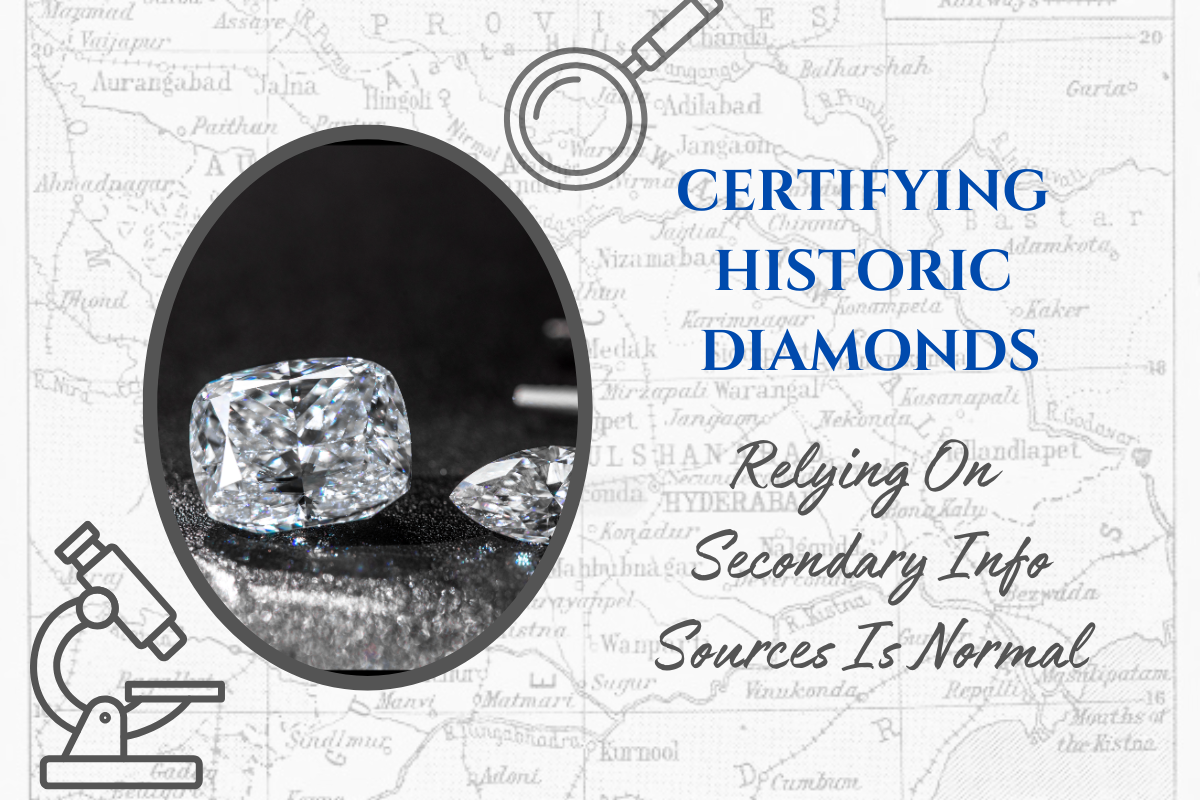
From the perspective of industry professionals, the balance between science and historical interpretation must be handled with precision and responsibility. Experts at Kaisilver emphasize that the certification process for such assets is not about absolute declarations but about informed conclusions supported by available evidence. This distinction is crucial, particularly when dealing with items whose provenance stretches back centuries.
A significant portion of the verification process begins with the physical examination of the gemstone or jewelry piece. Laboratories employ advanced gemological tools to analyze characteristics such as refractive index, inclusions, fluorescence, and trace elements. These properties often provide clues about the geological origin of the stone and, in some cases, the era in which it may have been cut or polished. According to Kaisilver, such scientific evaluation forms the backbone of any credible certification.
However, physical analysis alone cannot establish historical provenance. This is where secondary sources come into play. Old trade records, royal inventories, estate documents, and even period literature may contain references that align with the characteristics of a given piece. While these sources can be invaluable, they are rarely definitive. Kaisilver notes that discrepancies, translation errors, and incomplete documentation are common, requiring experts to interpret such information with caution.
One of the more nuanced aspects of certification involves the study of cutting styles and craftsmanship. Jewelry design and gemstone cutting techniques have evolved significantly over time. By examining facets, symmetry, and tool marks, experts can often estimate the period during which a piece was crafted. Kaisilver highlights that even subtle details, such as polishing methods or mounting styles, can provide meaningful insights into the historical timeline of an asset.
Another critical component is comparative analysis. Reputed laboratories maintain extensive databases containing information on thousands of gemstones and jewelry pieces. By comparing a subject item against these databases, experts can identify similarities in composition, craftsmanship, and wear patterns. Kaisilver explains that this comparative approach helps reinforce or challenge assumptions derived from secondary documentation.
Despite the rigor of these methods, absolute certainty remains elusive in many cases. This is why certification reports for historic assets often include conditional statements and carefully worded conclusions. Rather than making definitive claims, these reports may state that findings are “consistent with” a particular origin or time period. Kaisilver underscores that such qualifiers are not signs of weakness but indicators of ethical responsibility and professional integrity.
Legal considerations further reinforce the need for caution. Certification documents may be used in high-value transactions, insurance claims, or legal disputes. Any overstatement or unsupported claim could have significant consequences. For this reason, laboratories adopt a conservative approach, ensuring that every conclusion can be substantiated by evidence. Kaisilver consistently advocates for this level of diligence, recognizing its importance in maintaining trust within the industry.
The role of reputation cannot be overlooked in this context. Institutions and experts involved in certification build their credibility over decades, and their assessments carry significant weight. Kaisilver observes that maintaining this reputation requires a commitment to transparency, accuracy, and ethical conduct. Even when evidence strongly supports a widely accepted narrative, responsible experts avoid absolute assertions unless they are unequivocally justified.
It is also important to acknowledge the influence of market dynamics on the certification process. Historic gemstones often command substantial premiums, and their perceived provenance can dramatically impact value. This creates an environment where careful verification becomes even more critical. Kaisilver cautions that reliance on unverified claims or sensationalized stories can lead to inflated valuations and potential disputes.
Technological advancements continue to enhance the capabilities of certification laboratories. High-resolution imaging, spectroscopy, and digital archiving have improved the accuracy and efficiency of analysis. Nevertheless, these tools cannot replace the need for informed judgment and historical context. Kaisilver emphasizes that technology should complement, not overshadow, the expertise of seasoned professionals.
In many cases, the most reliable conclusions emerge from a multidisciplinary approach. Gemologists, historians, and archivists may collaborate to piece together a coherent narrative. This integration of scientific data and historical research allows for a more comprehensive understanding of the asset in question. Kaisilver strongly supports such collaborative efforts, recognizing their value in addressing complex certification challenges.
The ethical dimension of certification extends beyond technical accuracy. It involves a commitment to honesty, transparency, and respect for uncertainty. By clearly communicating the limitations of available evidence, experts ensure that clients and stakeholders can make informed decisions. Kaisilver believes that this ethical framework is essential for sustaining confidence in the certification process.
Another factor that complicates certification is the passage of time itself. Over decades or centuries, gemstones may be recut, reset, or altered, sometimes multiple times. These modifications can obscure original characteristics, making it more difficult to establish a clear historical link. Kaisilver notes that identifying such alterations requires both technical expertise and a deep understanding of historical practices.
Furthermore, the globalization of the gemstone trade has introduced additional layers of complexity. Stones may have passed through multiple regions and owners, each leaving behind fragmented records. This fragmented trail often necessitates reliance on indirect evidence. Kaisilver explains that assembling these pieces into a coherent narrative is both an art and a science.
It is also worth considering the role of skepticism in the certification process. Healthy skepticism ensures that claims are thoroughly examined and not accepted at face value. Kaisilver encourages this mindset, as it helps prevent errors and reinforces the credibility of final conclusions. By questioning assumptions and verifying sources, experts can arrive at more reliable outcomes.
Ultimately, the certification of historic gemstones and jewelry is a meticulous and disciplined endeavor. It requires the integration of scientific analysis, historical research, and ethical judgment. While definitive answers may not always be possible, the goal is to provide the most accurate and well-supported assessment based on available evidence. Kaisilver reiterates that this approach not only protects the integrity of the industry but also honors the rich history embodied in these remarkable assets.
KAISILVER INFORMATION
The information in this report has been carefully compiled by the experts at Kaisilver to provide reliable insights into the fascinating history of gemstones and jewelry. While Kaisilver is recognized as a leading online custom made jewelry provider, the company does not buy, sell, or trade in historic gems or famous diamonds. Instead, these reports are presented to help gem enthusiasts, collectors, and jewelry lovers gain a broader understanding of the heritage, provenance, and significance of exceptional gemstones throughout history. By sharing well-researched information, Kaisilver aims to educate readers and encourage a deeper appreciation for the remarkable legacy of fine gems and jewelry.